Pages

Subscribe:

Labels

lundi 8 août 2011

London riots: Theresa May to meet police chiefs


Home Secretary Theresa May is meeting senior police officers following a second night of violence in London.

Mrs May returned from her holidays after more than 100 people were arrested and 35 officers injured in two nights of rioting and looting.

A peaceful protest in Tottenham on Saturday over the fatal shooting by police of Mark Duggan, 29, was followed by violence which spread into Sunday.

Police are considering arrests for inciting violence through social media.

Mrs May, who had been in contact with other senior politicians and senior police officers while overseas, was meeting Acting Metropolitan Police (Met)Commissioner Tim Godwin and other officers on Monday afternoon.

Nick Clegg: "People indulging in violence, looting and theft have absolutely no excuse"

A spokesman for Prime Minister David Cameron, who is on holiday in Italy, said: "We are very clear that those responsible for that violence and looting will be made to face the consequences for their actions."

On Sunday night three officers were hurt when a vehicle hit them as they tried to make an arrest in Chingford Mount, north London.

Clashes later broke out in Enfield, north London, where shop windows were smashed and a police car damaged.

Oxford Circus

Up to 200 youths looted shops and charged police in Coldharbour Lane and the High Street in Brixton, south London.

Fifty youths gathered in Oxford Circus, central London, and threw objects at shops and more than 30 youths vandalised and looted shops in Walthamstow, east London.

A spokesperson for the London Fire Brigade said it received 445 emergency calls during Sunday night.

Three fire engines were damaged and crews were called to nine large fires in Edmonton and three fires in Brixton.

The disorder followed rioting in Tottenham, north London, which began on Saturday night and continued into Sunday morning.

Surveying the wreckage in Tottenham High Road Deputy Prime Minister Nick Clegg said the riots would leave "big scars" on the community.

Visiting the scene after returning from holiday on Monday morning Mr Clegg met business owners, local police chiefs, councillors and religious leaders.

'Rotten for London'

He said: "We need to start talking together to identify everything that happened so we can rebuild, not just physically but socially.

"I think the government has to engage actively at all levels and on an ongoing basis."

Metropolitan Police Commander Adrian Hanstock said: "This is not groups of people acting on behalf of communities or with any consent.

"This is individuals who are actually attacking communities, businesses, properties and houses and actually causing a huge amount of upset and criminality."

Mark Duggan who was shot dead by police in Tottenham Mark Duggan was shot dead by police in Tottenham

Kit Malthouse, Deputy Mayor of London and Chair of the Metropolitan Police Authority, said the police did a good job.

Talking about the impact on the capital's image, one year ahead of the Olympic Games, he said: "It's pretty rotten for London, it does not look good.

"What we need to do over the next few months is to underline to people the fundamental truth about London which is that it is one of the safest, great big cities on earth."

Deputy Assistant Commissioner Steve Kavanagh said: "Social media and other methods have been used to organise these levels of greed and criminality."

He described some messages posted on social media sites as "really inflammatory, inaccurate" and said police would consider arresting people using Twitter in relation to incitement to violence.

"That investigation is already under way and that is exactly the sort of thing we are looking at," he said.

'Huge need'

Mr Kavanagh pledged that more officers would be on London's streets on Monday night to prevent or tackle further outbreaks.

A candlelit vigil is to be held at The High Cross in Tottenham, between 19:00 and 20:00 BST on Monday.

There have been calls for the government to do more to address the problems faced by young people in the area.

Professor Gus John from the Institute of Education at the University of London said: "Much more attention needs to be given to young people themselves.

"They're talked about a lot - very rarely are they spoken with, very rarely are opportunities made for them to have conversations with themselves."

The Labour MP for Tottenham, David Lammy, said he represented a community with the highest unemployment in London, which desperately needed jobs and investment.

"The deputy prime minister really does now need to respond to the huge need that exists in this community excepting, of course, that violence can never be an excuse for proper political and democratic engagement."

Operation Trident

Sixteen people have so far been charged with offences including burglary, violent disorder and possession of a pointed or bladed weapon following the Tottenham riots.

A police officer was also hurt in Thursday's incident where Mr Duggan was killed.

It was described by police as a planned event under Operation Trident, which investigates gun crime in London's African and Caribbean communities.

The results of ballistics tests should be known within 24 hours, the Independent Police Complaints Commission (IPCC) said.

An inquest into Mr Duggan's death is due to open at High Barnet Coroner's Court on Tuesday.


Hackers take aim at prison locks and other real-world targets


Las Vegas (CNN) -- If you've seen the 1983 movie "WarGames," in which a young Matthew Broderick accidentally uses computers to bring the world to the edge of "global thermonuclear war," then you have a pretty good idea what hackers and security researchers are super-concerned about these days -- in real life.

Here at the Black Hat hacker conference at Caesars Palace, computer security experts have shown ways they can use virtual tools to tap into and tamper with all kinds of stuff in the real world, which is the gist of what made "WarGames" so scary.

No longer limited to the digital domain, hackers -- many of them working for good -- are now targeting prison systems, the power grid and automobiles. They'll target anything with a mini-computer inside of it. These days, that's pretty much everything.

Researcher Don Bailey pointed out that there's even a pill bottle with a cellular connection, so that it can remind its owner when to take his or her medicine.

His first thought: "I'm not sure if that's a good idea."

A computer worm called Stuxnet is the main reason hackers and security types are focusing on these "real-world exploits" right now. While Stuxnet isn't grabbing as many headlines these days as Anonymous and LulzSec -- two hacking groups that have been stealing personal data and taking over big-name websites -- in-the-know security experts and ex-government officials say the idea behind that worm is actually far scarier.

"The Stuxnet attack is the Rubicon of our future," Cofer Black, the former head of the CIA's Counterterrorism Center, said during a keynote talk here.

Stuxnet showed, for the first time, that a bit of malicious computer code could control industrial systems. The common wisdom is that the worm, which spread all over the Internet last year, was designed to attack and possibly blow up nuclear facilities in Iran.

No one knows for sure who wrote that worm, and its powers were never put to use. But the code is out there, and security researchers and hackers are jumping at the chance to study that code and figure out what else it -- or something like it -- could do.

The examples surfacing at Black Hat and DEF CON, a companion hacker conference attended by 15,000 people, sound like they're pulled from a Hollywood thriller.

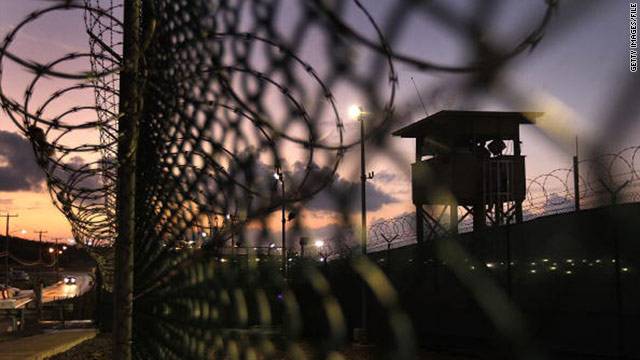
Tiffany Rad, a computer science professor by day, showed that a little-known electronic component in correctional facilities could be hacked and used to throw open all the doors that lock prisoners in their cells.

"Where there exists a computer, there's still a chance of breaking that computer," said Teague Newman, who worked with Rad on the hack. The two say they have gone to the federal government with their research. They won't publish the exact code someone could use to tap into prison lock systems for fear that such an event would actually occur.

The prison hack wasn't even that hard, they said. Working in a home basement in Virginia on a budget of $2,000, it took the duo only two hours to figure out and exploit the bug, which attacks a Siemens networking component called a programmable logic controller.

"It was not difficult," Newman said.

Siemens is working on a fix, but it won't necessarily come quickly.

"We need time to go after those vulnerabilities," said a Siemens engineer who asked not to be named because he's not authorized to speak on the record. "It's not like in the IT world where you can quickly create a patch. We are really talking about critical systems here ... so if you create a patch you want to make sure the patch doesn't influence operations and the PLC (the networking component) is still running afterwards as designed."

Rad and Newman said that company doesn't deserve all the blame. The way prison security systems are networked, and the way employees use them, are also at fault.

Central computers that control locks should not be hooked up to the Internet, for example, but they often are, the researchers said.

Other Black Hat speakers discussed the vulnerabilities of electrical grid and water systems, which, theoretically, could be attacked using similar methods. And further attacks focused on holes in cellular networks.

Again, the targets are real-world, not virtual.

Bailey of iSEC Partners demonstrated a way to hack into the mobile components on many cars to unlock or start the vehicles with a few texts from his Android phone. But breaking into cars isn't the scary part, Bailey said in an interview.

"I could care less if I could unlock a car door," he said. "It's cool. It's sexy. But the same system is used to control phone, power, traffic systems. I think that's the real threat."

As for solutions, Bailey said the problem is the cost and lack of regulation.

"The issue is not just architecture but its cost," he said. "A lot of the errors and the vulnerabilities I'm seeing (are) in overall architecture. It's all systems -- whether it's your car or your tracking device or your pill bottle or whatever.

"It's the issue of no regulations, no standards and no one enforcing any semblance of security."

Security professionals need to step back from the technology and look at how these real-world systems -- from prisons to power plants -- are designed, said Tom Parker, vice president of security services at FusionX, a computer security company.

"We're making the same mistakes over and over again," he said, adding that these at-risk networking components are doing more than they were designed to do.

None of the researchers argue that society should stop putting little computers inside everything. Instead, they said, we need to work harder to make those little computers secure. And if we don't, they say, the consequences could be huge.

jeudi 4 août 2011

You know you're from Facebook if ...


If your Facebook friends fondly recall that ice cream shop downtown or the crazy guy who used to dance around the park, you've probably read about it lately on Facebook.

And it might be a sign of things to come.

Facebook seems to be experimenting with some changes to the News Feed at the same time the site's longstanding "You Know You're From ..." groups are hitting a viral resurgence.

The result? Lots of posts that users probably think are just appearing on the group's wall are instead getting pushed into the News Feed of all their friends.

Facebook confirmed Monday that it's working on some tweaks to the News Feed that may be making the feed a lot more robust (some might say cluttered) in the near future.

"We are currently testing a feature within News Feed that gives people the ability to see what their friends are commenting on and 'liking' as these actions are being taken on Facebook," a spokesman said in an e-mail. "This test includes a small percentage of Facebook users, just a fraction of a percent.

"In the coming weeks, as we learn more from this test, we'll keep making improvements and may expand it to more people."

In the meantime, not everybody's thrilled about the work in progress.

"Wow that #YouKnowYoureFrom thing on #facebook got really old really quick," one Twitter user wrote Thursday morning. There were a couple of more tweets, but they can't be quoted in polite company.

Some users who had been posting to "You Know You're From" pages (and most cities of any size probably have one by now) said they had no idea that their friends were seeing all of the comments. Typically, writing on the wall of a group or fan page keeps the conversation there.

The most popular star in primetime is...

For anyone who can't get enough of those feisty naval investigators, this information should not come as a surprise: The most popular actor in primetime right now is "NCIS"' Pauley Perrette!

That's according to the latest Q Ratings, a survey taken a few times a year to judge who are the most popular stars, based on audience awareness. In fact, "NCIS" actors occupy most of the top slots, save Nathan Fillion, the star of ABC's "Castle." The geek god is ranked No. 6.

So who's after No. 1? Next up is Cote de Pablo, who plays Ziva on the CBS drama. No. 3 is Jim Parsons of "The Big Bang Theory," No. 4 is "NCIS" lead Mark Harmon, No. 5 is David McCallum (Dr. Donald Mallard), and No. 7 is Special Agent Anthony DiNozzo, a.k.a. Michael Weatherly.

Q ratings come in handy when networks want to gauge whether an actor is worth the time (and money) to cast and/or keep on the payroll. So expect at least 20 more seasons of "NCIS."

Kidding! (We think).

Tiger looks the part on return to action but trails Scott by six shots


(CNN) -- Tiger Woods offered glimpses of a return to the form that secured him 14-major championships as he fired an opening round 68 at the Bridgestone Invitational.

Playing his first tournament for nearly three months after an injury lay-off, Woods finished day one in Ohio at two-under-par, six behind leader Adam Scott, of Australia.

With three birdies and just one bogey Woods looked in good touch in his first competitive action since he dropped out of The Players Championship back in May.

After his round he told Sky Sports: "I felt good today, I hit the ball really flush. The hardest part was to control my distance. It was fun.

"I've got much more speed and compression through impact and the ball is taking off. I was hitting numbers I haven't hit before."

Asked what he missed most about being away from the game he replied: "The competition, by far.

"I'm right there. Six back, three rounds to go I'll keep plugging forward and playing my way round the golf course. It's fun to be walking around pain free."

He fared much better than his playing partner, British Open champion Darren Clarke, who eagled the eighth hole but slumped to a seven-over round of 77.

Scott is one shot ahead of compatriot Jason Day, who finished the day on seven-under after a bogey-free 63.

American Nick Watney is third on five-under and nine players are a shot back on four-under, including Denmark's Thomas Bjorn and American Stewart Cink. Phil Mickelson is on three-under.

"I really enjoy playing against the best golfers in the world on the biggest stage," Day told the PGA Tour's official web site.

"I've always wanted to play on the big stage, and I'm finally here. I just want to keep the year going in the right direction. I don't want to go backwards.

"My putter was good all day. It felt like it was a boring kind of a game. It was down the middle, on the green, and every two or three holes was a birdie."

U.S. Open champion Rory McIlroy, who said on Wednesday he is close to renewing his card on the PGA Tour in America, matched Woods with a round of two-under.

On his potential return to the U.S. Tour he said: "It's something I've thought about, especially after winning at Congressional. I'd like to give it another go.

"Ninety-five percent of me wants to come over here, and it was just making sure everything is in place by next year to make sure that coming over here and playing is as easy as possible logistically, get a place over here and maybe spend three or four months at the start of the year here."

The world's number one and two players, English duo Luke Donald and Lee Westwood, finished with opening round scores of 68 and 67 respectively.

Stocks: Worst day since 2008 financial crisis


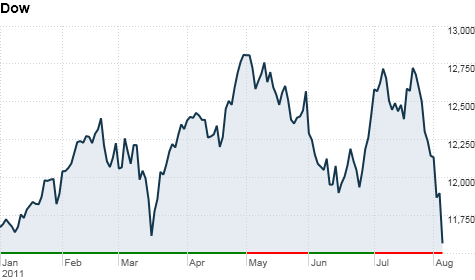
NEW YORK (CNNMoney) -- Stocks plunged Thursday in their single worst day since the 2008 financial crisis.

The Dow tumbled 512 points -- its ninth deepest point drop ever -- as fear about the global economy spooked investors.

"The conventional wisdom on Wall Street was that the economy was growing -- that the worst was behind us," said Peter Schiff, president of Euro Pacific Capital. "Now what people are realizing is the stimulus didn't work, and we may be headed back to recession."

U.S. markets were already sharply lower on widespread worries, including the weak job market. But the selling gained momentum as Japanese and European policymakers stepped in with dramatic measures to shore up their financial markets.

There's "total fear" in the market, said Bob Doll, chief equity strategist at the world's largest money manager, BlackRock.

All three major indexes tumbled more than 4% Thursday and erased all their gains for the year. The indexes have also pushed into "correction" territory -- defined as a 10% drop from recent highs. The Dow, Nasdaq and S&P 500 have all fallen 10% in just the last 10 days.

"In the last two weeks, we've been through the ringer," said Rich Ilczyszyn, market strategist with futures broker Lind-Waldock. "When we start looking at the recovery, there's nothing to hang our hats on anymore."

The market's fear gauge -- the VIX (VIX) -- surged 35.8% to a reading of 31.8. A level above 30 signals a high degree of fear.

At the closing bell, the Dow Jones industrial average (INDU) was down 512 points, or 4.3%, with Alcoa (AA, Fortune 500), Caterpillar (CAT, Fortune 500) and Bank of America (BAC, Fortune 500) among the biggest drags on the blue chip index. Thursday's sell-off marked the steepest point loss since October 2008.

The S&P 500 (SPX) was down a staggering 60 points, or 4.8%.

The Nasdaq (COMP) lost 136 points, or 5.1%. Some of the better performing tech stocks, Apple (AAPL, Fortune 500), Google (GOOG, Fortune 500) and Netflix (NFLX) were all down between 2% and 3%.

Fears about a global slowdown are at the forefront of investors' minds amid recent weak economic data. Early Thursday, the latest reading on jobless claims showed a large number of Americans remain unemployed.

10 job killing companies

Adding further to investors' jitters, Wall Street is waiting for Friday's jobs report, which BlackRock's Doll said was adding to the selling pressure.

The report is now a bit of wild card after it has come in far below forecasts for the last two months.

Economists surveyed by CNNMoney are expecting the report to show that the U.S. economy created 75,000 jobs in July, marking a slight improvement over the paltry 18,000 jobs added in June.

The unemployment rate is expected to hold steady at 9.2%.

Economy: Economic woes weren't contained to the United States.

In moves that they hoped would tame financial markets, Japan's government stepped in to weaken the yen, and the European Central Bank decided to re-enter the European bond market for the first time since March.

Track currencies

Those decisions come just a day after Switzerland intervened to curb the Swiss franc's rise.

"It's true that we are in a period of a high level of uncertainty, not only in the euro area but at the global level," ECB President Jean-Claude Trichet said in a press conference Thursday.

The ECB wasted no time and immediately started buying European bonds while Trichet's press conference was still going on. But bond traders were quickly disappointed, after they discovered the central bank only bought Portuguese and Irish debt -- not the Spanish and Italian bonds at the center of the crisis.

The ECB also left interest rates unchanged at 1.5% and initiated a 6-month refinancing operation to add liquidity to European markets.

European stocks plunged. Britain's FTSE 100 (UKX) tumbled 3.4%, Germany's DAX (DAX) lost 3.9% and France's CAC 40 (CAC40) fell 3.4%.

Asian markets ended the session mixed. The Shanghai Composite and Japan's Nikkei edged up 0.2%, while the Hang Seng in Hong Kong fell 0.5%.

Meanwhile, it should come as no surprise that in the U.S., investors flocked to assets perceived as low-risk, including Treasuries and gold.

Treasury prices rose, pushing the yield on the 10-year note down to 2.43% from 2.6% late Wednesday, and gold futures for December delivery fell $7.30 to $1,659 an ounce. Earlier in the session, gold hit a record high of $1,684.70 an ounce.

In other commodities, oil prices slumped 5.3% to $86.63 a barrel.

Companies: Auto giant General Motors' (GM, Fortune 500) second-quarter earnings nearly doubled to $2.5 billion, as revenue rose 19% and topped expectations. Shares of GM slid 4.3%.

After the closing bell, insurance giant AIG (AIG, Fortune 500) reported second-quarter operating income of $1.28 billion, falling short of analysts' expectations.

Shares of LinkedIn (LNKD) surged 7.8% in afterhours trading, when the newly-public company reported its second-quarter profit doubled from a year ago and its sales beat forecasts.

In addition to quarterly financial reports, retailers were also announcing July sales results.

Costco Wholesale Corp. (COST, Fortune 500) said its same-store sales climbed 10% last month, while Limited (LTD, Fortune 500) said sales rose 6%. To top of page